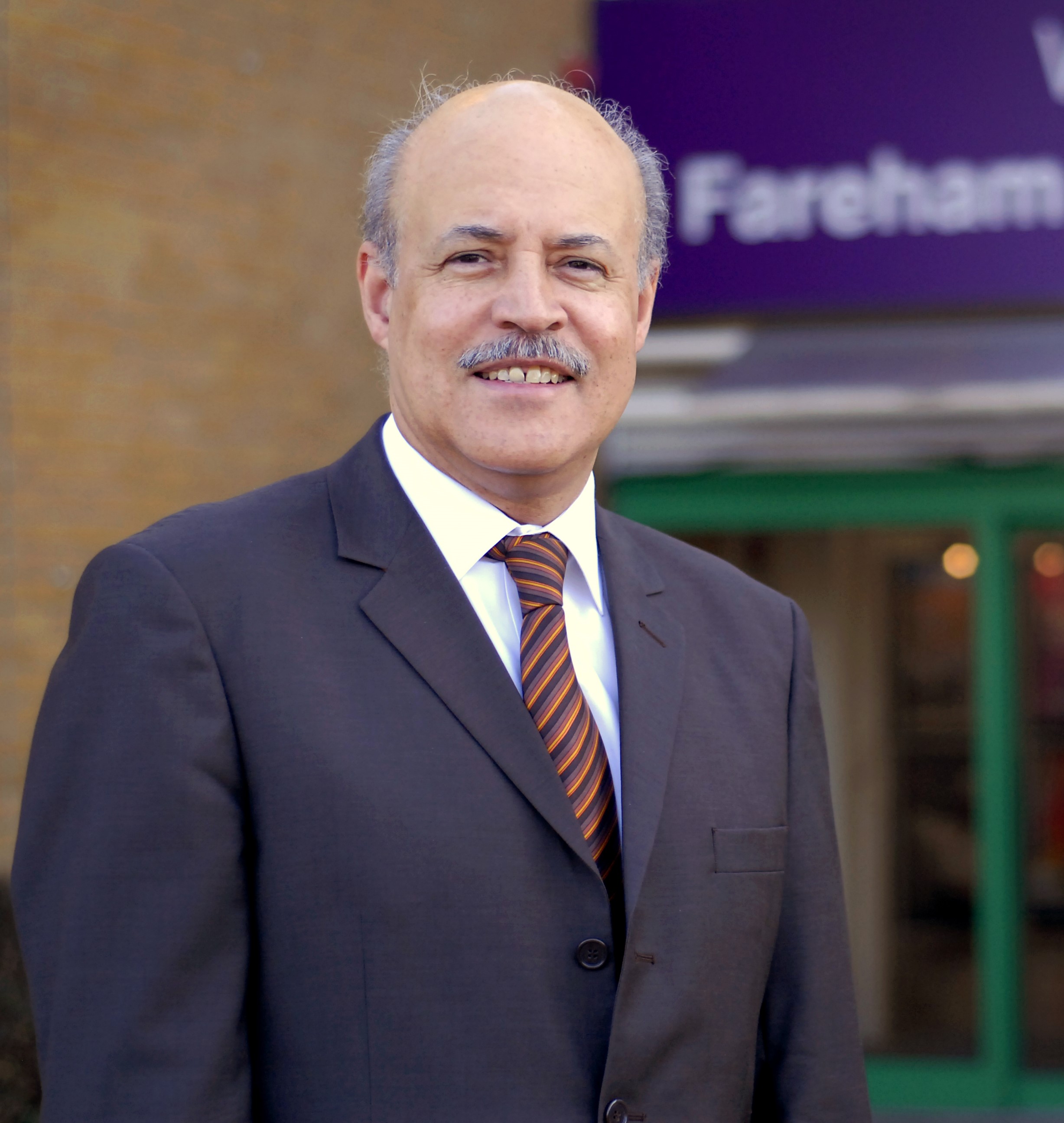
Author
Carl M Groves BSc MA MBA
Hampshire, UK
Email: carle.groves@btinternet.com
Document Publication Date: 18 April 2024
Copyright © Carl Groves, 2024
An Introduction to a Manifesto for Britain 2024
With a UK General Election promised for the second half of 2024, UK political leaders will already be working on the content of their party manifestos. Whatever final version each party agrees to campaign on, all policies included (or indeed not included) will be subject to intense scrutiny and commentary by various audiences at national and constituency level. I am certain that there will be much debate about, and criticism of, the contents of each manifesto.
If previous general elections are anything to go by, I predict that I too will have some strong views on the contents of each of the party manifestos. However, before engaging in any political debate or policy criticism, my first instinct has always been to ask myself this simple question, namely: “What would I do if it were my decision?”
In this short publication – which I have limited to approximately 10,000 words – I attempt to develop both general and specific policy ideas which could easily be further developed into a set of measurable and costed targets within any political party’s final manifesto document. [Note: For brevity, I have not included reams of material which I believe would prove to be all but uncontentious between the various UK political parties.] In the process I seek to answer the above question for myself and to make a modest contribution to what I hope will be a healthy political debate during the weeks and months leading up to the UK General Election 2024.
I hope what follows is of interest to you and that it inspires you in your own thinking about what policies the new administration should pursue. Please feel free to circulate a link to this document – or the document itself – to others who share our interest in public policy.
With Best Wishes
Carl Groves 18 April 2024
The Mission and Vision statements which start this document are part of a methodology used in strategic planning to test and focus policies and targets against some overarching goal; in this case, the future success of the United Kingdom as an economy and as a society. The Mission statement seeks to provide an explanation and validation for the inclusion of all the policies which follow. The Vision statements provide a mental picture of what the achievement of the Mission would look like.
Mission
The United Kingdom to be a Successful, Sovereign Nation where Individual Opportunity is not Determined by Birth or by Inheritance
Vision
- Representative Government where all People Matter and all Votes Count
- Policies ensuring a successful Economy and Society
- Policies supporting Working People, Good Employers, and Education & Training
- Policies promoting Children and Families
- Decisions made at the most appropriate level of National and Local Government
The structure of the manifesto is designed to show the interconnectivity of its elements. This manifesto is, in essence, a set of integrated policy ideas for the next UK government and will be referred to as ‘the plan’ throughout this document. This plan, however, is not the same thing as a party-political manifesto. A party-political manifesto is a political party’s attempt to lay out a unique programme for government upon which it hopes to be elected. In writing this plan I do not have such a constraint, nor do I concern myself with appealing to the supporters of any one political party. This document is a genuine attempt to look at the public policy needs of Britain in a time of crisis and as we approach the second quarter of the twenty-first century.
Policy Summary
What is attempted here is a set of coherent policies covering some of the most important and contentious areas of government. I invite any political party to consider including all these policies within their party manifesto and plans for government, however, I am fully aware that they are likely to be highly selective of these, and many other policy suggestions, based on their need to achieve what they consider to be a party-political policy coherence. Of course, they may decide not to include any of these policies and ideas. However, this plan would still have a useful purpose; and that is to remind us that there are always alternative policy options and to challenge you, the reader, to answer the same question that I have sought to answer: “What would I do if it were my decision?”
The Policy Summary which follows is an attempt – in just seven statements – to offer a vision of what a future Britain could look like if the Policy Aims were accepted and then consistently applied by our government and legislature over the course of at least a full parliament, but preferably over the course of ten-to-fifteen years. The Policy Aims are a set of twenty-one high level targets deemed necessary to deliver the vision expressed in the Policy Summary.
Summary Policy: No. 1
An honest, fair, and simple tax system; and a fiscal policy ensuring both high quality public services and a balance of income and expenditure.
This means an end to the disingenuous mudslinging about which political party is best at balancing the books. Even though it is often a false narrative it is too easy for one party to say that another party’s promises are financially undeliverable. For example, one party criticises another party for ‘underfunding’ public services but all too often without saying where the resources could and should come from to ‘properly fund’ these public services. Of course, ‘economic growth’ is the go-to solution for any problem with the government finances but often this is at best a longer-term prospect which does not address pressing issues, many of which in themselves are a brake on the very economic growth which is so badly needed.
In short, we must raise more tax revenue as well as securing more growth! How we could do this is explained in some detail later but, in essence, we need to vastly improve tax compliance by both individuals and businesses, and to treat all forms of personal income (wages, pensions, interest, rents, dividends, profits, capital gains, and large gifts) in the same way within a new ‘combined personal income tax’ system. The Institute for Fiscal Studies and the Office for Budget Responsibility can help provide the data for tax evasion and avoidance in the UK, but various reports have indicated that there is an annual shortfall of many tens of billions of pounds (possibly £100 billion) in tax revenues due to undeclared income and sophisticated tax avoidance. Whilst not all of this will be recoverable there is an urgent need for a ‘new tax deal’ with the British public that says something like this: ‘We will keep tax rates at the lowest reasonable level commensurate with a modern, efficient, and compassionate society but this is subject to us achieving full tax compliance’.
Non-compliance in tax matters needs to be seen as behaviour which is as unacceptable as racial or gender discrimination. For the UK Government this must be both a ‘regulatory matter’ and a ‘cultural narrative’ based on the sporting notion of ‘fair play’. Improving compliance and, at the same time, ending the practice of giving additional tax allowances and lower tax rates on dividends and other unearned income would increase tax revenues very significantly indeed. It is also time to tax personal wealth in ways that cannot be easily evaded or avoided. Inheritance Tax and Capital Gains Tax, for example, are so riddled with ‘loopholes’ that we can only assume this to be deliberate policy. Given the ever-expanding life-style chasm which exists between affluent and poor pensioners, we will means-test most pensioner benefits with a view to providing more support to pensioners who are totally dependent on the State Pension and who struggle just to survive. When taken together such measures would release many tens of billions of pounds each year in extra tax revenue without the need for new taxes and without even having to increase tax rates. These additional revenues would be used to kick start a proper growth strategy and to fully implement this plan.
Summary Policy: No. 2
Effective and efficient governance of the UK and its nations and regions through more devolved powers and less centralised control.
It is very surprising to discover just how centralised UK Governance has become when compared to countries of a similar population size. As a result we are not harnessing the energy and ideas which would flow from decision-making and participation at the ‘sub-federal’ level. The concentration of political power has also been shown to lead to more corruption and more cynicism about what government does. A general policy of further devolution, combined with an end to first-past-the-post elections, would encourage greater participation in both local and national elections. Proportional representation therefore should be adopted for elections to 9 new ‘Regional Assemblies’ in England, for reorganised Local Councils, and for elections to Westminster. Although this project will take time to fully implement there needs to be an early commitment to the new political structure and to the development of Regional Government as such. Brexit has made these changes not only desirable but essential and they may yet prove to be the glue which holds both British society and the Union together.
Summary Policy: No. 3
Priority given to investment and resources for children, families, younger generations of adults, science, and green technologies to enable the UK to be both a sustainable and a prosperous sovereign state.
This is an unashamed reprioritisation of economic and social policy towards children, families, and younger generations of adults to enable a much-needed levelling up of the intergenerational gap and to ensure the very future existence of the country. Much of what is written in this plan will support those who have yet to have their childhood, their adulthood, or their middle-age. Our first-past-the-post election system favours the voting choice of older voters and this, coupled with an affluent ageing population – benefitting from the unprecedented opportunities for social mobility and wealth accumulation of the past 75 years – has given enormous political power to the approximately 9 million high-income and/or asset-rich over-65s living in the UK today. This phenomenon now impacts every aspect of public policy and government (and even opposition) responses to emergencies such as the Financial Crisis (from 2008), Covid-19 (from 2020), the Cost-of-Living Crisis (from 2021), and just about everything in-between. A reprioritisation towards children, families, and younger generations of adults is now not simply overdue but, alongside the need to address the climate crisis, has become an existential issue for Britain continuing to hold on to a place in the league table of affluent nations.
Our future also depends upon sustainable agriculture, manufacturing, and services and particularly upon sustainable energy generation. This is why we must direct our efforts in science and technology towards creating healthy and sustainable environments at home and at work, and in every local community. Alongside traditional economic indicators we also need measures of economic prosperity and social development which reflect our nation’s true economic and social welfare. The current epidemic in mental health disorders for example reflects an underlying deterioration in Britain’s net economic and social welfare but a deterioration that is not measured as such. What is being measured are the incomes of the additional psychiatrists, mental health nurses, and counsellors needed to address the problem, and which will be recorded as an actual increase in our GDP or National Income. So this crisis in our collective national mental health will be interpreted in national statistics as our society getting richer when it is an obvious sign of increasing levels of social impoverishment.
Summary Policy: No. 4
Continuous investment in housing, hospitals, schools, energy, water, transport, and communications which improve the quality, utilisation, sustainability, and affordability of these assets and services.
With our antiquated political structures and annualised nineteenth century methods of taxation and spending, the UK is unable to commit to larger scale infrastructure and environmental projects with anything like sufficient levels of certainty (e.g. HS2). The system of annual budgeting creates a ‘stop-go’ investment environment for housing, hospitals, roads, railways, schools, and other vital social and commercial investment projects. The new government must put in place a better system for long-term investment planning that achieves a continuous stream of public investment projects, making much more efficient use of public investment finance and the related ‘real’ economic resources required, including construction workers.
Summary Policy: No. 5
Housing and Local Amenities, Health and Social Care, Education and Training, Security and Justice established as the ‘Four Pillars of British Society’.
All areas of policy in national government are important but some policies play a particularly key role in defining what it means to be a member of a society and therefore what you can expect to experience as a citizen or resident of a sovereign United Kingdom. These areas of policy are often referred to as social policy, but we need to remember that getting social policy right makes a huge positive contribution to the British economy and to the success of British business. The social policies which most affect the lives and aspirations of our people are, of course, always open to debate but the above four areas of policy and my later explanations are produced in this plan to serve a twin purpose:
- to make the case for the indispensable contribution they make to a successful UK
- to challenge the reader to suggest a better set of alternatives.
Summary Policy: No. 6
Regional Banks established offering specialist business advice and financial services to Smaller Businesses.
It is long overdue to recognise that Small Businesses (from single person owner/worker enterprises to those employing several 100s of workers) should have access to a non-profit making bank which knows their local area and can offer the full range of business advice as a ‘one-stop small business service’. It is proposed that each Nation and Region will have a designated ‘Regional Bank’ providing Business Advice and Financial Services for Start-Up, Growth, Development, Sale, and Winding-Up of any small business located – and mainly operating – in a particular Region. After initial set-up costs Regional Banks will become self-financing not-for-profit organisations with their Directors appointed by their respective National or Regional Executive. Regional Banks will be supported and regulated by the Bank of England and will be able to offer small business loans at the most competitive interest rates possible i.e. Base Rate Plus*.
[* Base Rate plus a small margin for administrative costs]
Summary Policy: No. 7
High quality employment established as the norm.
The recent period of high inflation and the on-going ‘cost-of-living crisis’ is a timely reminder of the vital importance of high-quality employment for the future of stable families and for the future of the British economy. Jobs which pay enough for individuals and families to live their most useful and productive lives, and to be fully participating members of a community, require skilled workers. This in turn necessitates government support for training, retraining, and workforce development. It also requires government bodies at all levels to ensure they prioritise their procurement of goods and services from enterprises who offer high quality employment (in pay, worker benefits, training and so on) as standard practice and which are also fully tax compliant.
The twenty-one Policy Aims which follow are the core of this manifesto and have been designed to support the achievement of the Policy Summaries above.
- Full tax compliance by individuals and organisations, and common treatment of all forms of personal income (wages, pensions, interest, rents, dividends, profits, capital gains, large gifts).
- The Treasury Revenue Account will be balanced by balancing tax revenue and expenditure; The Treasury Capital Account will be subject to borrowing rules ensuring the overall economic viability of every public investment project.
- Income Tax and Employee National Insurance merged into one tax called: Common Personal Income Tax (CPIT).
- A United Kingdom Federal Government structure will support the 3 Devolved Nations of the United Kingdom and the 9 Regions of England – with substantial delegated responsibilities for Housing, Transport, Environment; Health, Social Care; Education, Skills, Culture; Policing, Justice; and Regional Banks for Smaller Businesses.
- Reorganisation of Ministerial Government Departments and the creation of 9 ‘Senior Ministries’ of equal status as follows:
- Housing, Transport, and the Environment (HTE)
- Health and Social Care (HSC)
- Education, Skills, and Culture (ESC)
- Home Affairs, Security, and Justice (HSJ)
- Defence and National Emergencies (DNE)
- Economics, Business, and Work (EBW)
- Finance, Taxation, and Benefits (FTB)
- Foreign Affairs and International Relations (FAIR)
- Governance: Federal, National, Regional, Local (GOV)
- Creation of a UK Parliament of 400 elected MPs (no House of Lords), 3 National Parliaments and 9 Regional Councils.
- Social and economic policies will prioritise the development and support of children, younger adults, and families to build both a more successful UK economy and a fairer UK society.
- UK science and green technologies will be supported and directed towards a sustainable yet prosperous UK economy.
- All public investment decisions will prioritise organisations offering high quality employment opportunities and workforce training, and will support the goal of greater social equality.
- Science and Green Technologies will be directed at creating healthy work, home, and community environments in which measures of economic prosperity (such as GDP) and social development are a true reflection of national economic and social welfare.
- Public investment programmes in housing, hospitals, schools, energy, water, transport, and communications will be more continuous and less ad hoc, promoting efficient planning, effective project management, and a high-quality infrastructure for the whole of the UK.
- Public procurement, and enforceable building and environmental regulations, will focus on improvements to the sustainability, quality, utilisation, and affordability of the UK Built Environment.
- Public services (such as the NHS and Social Care) will be funded to reflect their expected activity levels and their expected quality of service.
- The Economics, Business, and Work Department will have a duty to promote ‘long-term’ efficiency and efficacy in all government departmental spending activity, including that of the Finance, Taxation, and Benefits Department itself, and to scrutinise all draft ‘Treasury Budgets’ to ensure their focus is on economic considerations rather than political ones.
- Access to high quality: Housing & Amenities, Education & Training, Health & Social Care, Security & Justice, Public Transport, Culture, and the Environment will define what it means to be a citizen and resident of the United Kingdom. These areas of public and private endeavour will be the joint responsibility of Central Government and National / Regional Government throughout the United Kingdom.
- Each Nation and Region will have a designated ‘Regional Bank’ providing Business Advice and Financial Services for Start-Up, Growth, Development, Sale, and Winding-Up of any small business located – and mainly operating – in each of these 12 domains. After initial set-up costs Regional Banks will become self-financing not-for-profit organisations, with Directors appointed by their respective National or Regional Executives.
- A clear predominance of high-quality employment – in which workers have sufficient income and employment security to provide for a family and to meet all reasonable living costs – will be a precondition for companies and other organisations being granted any public contracts whatsoever.
- High quality employment will be supported by ‘Real Apprenticeships’ and life-long state support for Skills Training.
- Employers National Insurance Contributions will be replaced by a system of Employer Pension Contributions which will support an enhanced UK State Pension, from the Age of 65.
- Employees National Insurance will be merged with Income Tax reducing the overall income taxes burden upon working people whilst ensuring that millions of affluent retired people contribute more to the public services (such as Housing, Education, Health, Social Care, Policing, and Public Transport) for which they have been and remain the greatest beneficiaries.
- The existence of short-term employment contracts and flexible hourly paid work contracts will be reserved for genuinely ‘seasonal jobs’ and ‘short-term projects’ and for the employment of students – whose main occupation is further and higher education study and professional training – and for pensioners – whose main income is from pensions, investments, and benefits but who wish to continue working.
Explanation of the Policy Aims / Additional Policy Detail
Fiscal Policy
Following the Covid-19 pandemic it is now obvious to all sides of British political opinion that there are times when a nation needs to run a budget deficit to address substantial risks to its economy and society, such as national emergencies and economic recessions. However, when economic circumstances permit, the Government should aim for a balance between taxation and revenue spending to be less reliant on (net) government borrowing and much less reliant on the monetary policy known as ‘Quantitative Easing’, which causes house price inflation and inflation in the price of company shares and other commercial assets and which, eventually, feeds through to higher general price inflation.
A policy of aiming for a ‘long-run balance’ between tax revenue and public expenditure will help ensure that public spending does not result in unacceptable levels of general inflation due to excessive competition between the public and private sectors for scarce economic resources (such as: land, labour, and capital). Public spending should also be better deployed to increase the overall capacity of the UK economy itself, thereby reducing inflationary pressures through increased national productivity and national product. A good example of this is better work-skills training so that job vacancies can be much better matched to labour force availability. Persistent unemployment and under-employment running alongside high levels of job vacancies is the product of many years of cuts to per capita funding for further education and training (particularly adult training) and the availability of too few high-quality (and genuine) apprenticeship places in the workplace. Government borrowing for investment should be tested against 3 criteria:
- Is the investment likely to increase Net National Product?
- Is the investment likely to reduce the net operational costs and/or increase the quality of the service/s involved?
- Is the investment likely to increase UK Net Economic Welfare?
In addition, the interest costs on government borrowing need to be built into the projected revenue expenditure accounts for the period until the related debt is fully dispersed.
In the interests of equality and intergenerational fairness, it is high time for all forms of personal income: wages, pensions, interest, rents, dividends, profits, capital gains, and large gifts – i.e. both earned and unearned income – to be treated the same within a newly defined Common Personal Income Tax (CPIT) and for the UK’s many deliberate ‘tax loopholes’ to be closed. CPIT will have a Common Personal Income Allowance (CPIA) below which no CPIT is payable at all. Above the CPIA limit, CPIT will be payable at a basic percentage rate and a higher percentage rate just like income tax at the present time. Employee National Insurance will be merged with Income Tax within the new CPIT system and the starting point for any form of income tax deduction will be raised to £15,000 per annum. In this way, no-one will start to pay any form of income tax until their income is approximately two-thirds of the minimum wage. The current use of a ‘Basic’ and ‘Higher’ rate of income tax will continue but the collection of income taxes will be more fairly spread between different income levels and between different generations.
Pensioner Benefits (except for free medical prescriptions, eye, and hearing tests) will be targeted at ‘State-Pension-Dependent’ pensioners and not at Higher-Income/Asset-Rich pensioners – the single most affluent social group that has ever existed in the UK.
A new system of Employers’ Pension Contributions (EPCs) will completely replace Employers’ National Insurance Contributions and be paid at a level to fund most of the cost of a new UK State Pension of £15,000 annually (approximately two-thirds of the minimum wage) for all qualifying people from Age-65. All employers will pay a set fixed percentage of the value of each employee’s monthly gross pay and submit this monthly to the HMRC. The percentage figure will be set at a level to raise a similar amount of revenue (overall) to the current Employers’ National Insurance Contributions. The revenues collected from EPCs will be earmarked (hypothecated) for the purpose of substantially funding the costs of the new enhanced UK State Pension. The costs of this change for employers will be neutral but it will remove the historic anomaly whereby employers are asked to pay towards social benefits that are not always beneficial to their businesses. However every employer should see themselves as ‘co-beneficiaries’ of the new State Pension Scheme because it facilitates several advantages for the employer:
- Employees will know that their employment (and their employer) is a direct source of the funding for their future state pension and for the opportunity of future retirement.
- Without a more generous state pension, employers will increasingly face pressures to pay their employees substantially more generous employee pension benefits, or significantly higher wages in lieu of the additional costs to their staff of very expensive private pensions.
- Without a more generous new state pension age (of 65-years), and with the current prospect of the pension age being increased to 70-years, employees are having to ‘pace themselves’ through an indefinite working life with negative consequences for worker productivity.
Wealth and Property Taxes
In the UK and elsewhere there is currently increasing interest in the case for a bespoke wealth tax. Given the increasingly ‘windfall’ nature of wealth accumulation, this is very understandable. However, there are other things which we should try first. We will therefore review and update existing property taxes.
The obvious starting point will be to add several higher bands to Council Tax and to ensure that property revaluations are carried out every 10 years. The next step will be to remove tax avoiding “trusts” and other devices to circumvent Capital Gains Tax, Inheritance Tax, and Income Tax in the domestic property market. Council Tax Bands will therefore be regularly updated to ensure that they are always based on recent valuations and contain enough tax bands to fully reflect a UK housing stock that now ranges in values from £100,000 to £250,000,000.
To reduce the number of empty homes in the UK the Council Tax charge will be doubled after each full year that a property is left unoccupied, unless and until it is purchased by a local authority for redevelopment as a council house. Alongside a review of central government grants to local councils, the entirety of social care funding will be removed from local authority budgets altogether. An enhanced National Health and Social Care Budget will fund a new National Care Service (NCS) which will operate at regional and local government levels as most appropriate.
An Annual Property Tax (APT) on private homes, including those rented to third parties, will be levied as follows:
On Primary Homes:
- a zero rate on the first £600k of house value (twice the average UK house price)
- a rate of 0.3% levied on residual house value over £600,000 up to £1,200,000
- a rate of 0.5% levied on a residual house value of over £1,200,000 (with no upper limit)
On Second, Third, and Subsequent Homes:
- a rate of 0.3% levied on house value up to £300,000 (the average UK house price)
- a rate of 0.5% levied on a residual house value of over £300,000 (with no upper limit)
In the case of second, third and subsequent homes they will be subject to full Council Tax charges and, upon sale, be subject to the reformed Capital Gains Tax (i.e. under the new Common Personal Income Tax rules).
Some of the revenue collected from the reformed Council Tax and from the new Annual Property Tax will be used to help fund a substantial and ongoing programme of Council House Building and Refurbishment* and to fund improvements in Public Amenities. In this way house price inflation and private rent inflation will be controlled (as it was during the 1950s, 1960s and 1970s.) These measures alone will do more for genuine ‘levelling up’ in the UK than anything that has so far been considered in the twenty-first century.
[*That is: proper ‘Council’ Houses let by Local Councils and not the so-called ‘social housing’ let by ‘Housing Association Charities’.]
Taken together the reformed Council Tax and the new Annual Property Tax will constitute a substantial disincentive to own second and subsequent homes thereby ensuring that the existing UK housing stock is much better utilised, reducing avoidable environmental damage in the process. Where second and subsequent homes persist communities can be reassured that multiple homeowners are making at least some contribution to solving the UK housing crisis.
The net effect of these new tax policies will be to reduce the tax burden on Lower-Income/Asset-Poor Younger Adults and upon the less affluent regions of the UK. Higher-Income/Asset-Rich Older Adults will contribute a little more, but this will help to redress the current extraordinary tax and benefits imbalance in favour of the latter.
Business Taxes
There is an urgent need to rebalance the taxes paid by physical and virtual businesses, and especially between high street and online businesses. This rebalancing will include the abolition of Business Rates and their replacement with an Environmental & Social Charge (ESC). A relatively positive environmental and social impact will result in a lower charge whilst a relatively negative environmental and social impact will result in a higher charge.
With respect to corporation taxes, there is a pernicious problem of large overseas based corporations being allowed to pay their taxes in their home country and not to the UK Government. We will therefore instigate a ‘Corporate Turnover Tax’ which is based on the amount of business turnover or sales which an overseas corporation conducts in the UK. Corporation Tax payable within the UK will continue to be set at a competitive rate but Common Personal Income Tax rules will apply to any corporate profits which are distributed to business owners and shareholders.
The Four Pillars of British Society
Housing and Local Amenities (including Transport)
The UK is a Northern European nation subject to a highly variable annual climate cycle in which there is little to no chance for individuals or families to thrive without decent affordable housing. In turn, decent affordable houses need to be located close to good local amenities (i.e. schools, parks, shops, roads, public transport, sports centres, libraries and so on). Therefore Housing and Local Amenities will be a major area for policy focus and will be led by a senior government minister. The aim of policies in this area will be to improve the overall standard of housing and to greatly increase the available pool of council houses to provide an excellent alternative to private renting. The growth in the volume of rented housing provided by Housing Associations has resulted in much of today’s so-called ‘social housing’ becoming almost indistinguishable from private renting in both the rents charged and in the conditions of tenancy and, therefore, is not specifically supported in this plan. A large and ongoing programme of council house building will stabilise house price inflation and limit the amount of rent a private landlord can charge a tenant – as indeed it did in the 1950s, 1960s and 1970s. These new council houses will be built in areas with good job and business opportunities, have good access to public and private transport infrastructure and services, and will be integrated into communities so as not to become isolated ghettos.
Health and Social Care (HSC)
We will match the very best of the larger western European countries in the (per capita) resources we devote to Health Care and to state provided Social Care. In return for this commitment there must be a focus on long-term planning and value for money in the Health and Social Care Department, the NHS, and in Regional and Local Government health and social care related provision. Since the middle of the twentieth century social and economic policies have actively encouraged the numerical growth and economic wellbeing of the oldest population in UK history, so that today we have 9 million older people who represent the single most affluent social group which has ever existed in Britain. As far as Health and Social Care provision is concerned UK government policies over the past 75 years have, in effect, created an unlimited demand for services. In this scenario even the most generous Health and Social Care Department budget will require any government to ration services. Of course, unofficially, rationing goes on already! It is ‘achieved’ in several different ways, through:
- a postcode prioritisation of HSC services and treatments which increasingly and cynically favour some geographical areas over others (for political reasons);
- the sharpest elbows (including family pressure) to garner as much of the scarce HSC resource as possible;
- first-come-first-served (e.g. which ambulance gets to the A&E Department first)
- clinicians increasingly being forced into euphemistic judgements, such as the ‘clinical value’ of providing some treatments to some patients;
- hospitals and local authority health departments simply running out of staff, beds, and budgets.
This ad hoc, and increasingly political, arrangement has the cynical ‘advantage’ that politicians never need to acknowledge the fact of HSC rationing in the UK! This could be labelled the ‘British model of HSC rationing’ and it reflects our political culture at its most cowardly. It also means that some people in advanced old-age benefit from successive, life-extending, medical treatments whilst some children wait for treatments to have a chance of any life at all. It’s time for us all to grow up and to spell out the choices we need to make, that is, formally rather than informally and transparently rather than covertly.
As a start, the Department for Health & Social Care will produce a workable range of possible options for rationing their services concomitant to a range of possible funding commitments. The British people will then be consulted via constituency meetings and on-line surveys as to their HSC service rationing preferences within a set number of HSC budgeting scenarios. The results of this consultation will be used by the government as a basis for formalising a HSC Rationing Policy so that even a much more generous HSC Budget than at present – which will be at the top of the list for larger western European nations on a per capita measure – is not overwhelmed by demand. It was very noticeable during the Covid-19 Pandemic that an extreme form of NHS rationing was carried out and that the UK government was more than willing to prioritise Covid-19 disease above cancer, stroke, cardiovascular disease, and virtually every other type of medical condition. The net effect of the national response to Covid-19 and indeed much of our current ‘informal’ NHS rationing policy is to greatly prioritise the needs of older people (particularly the higher-income/asset-rich) at the expense of middle-aged and younger adults, and children; whilst the net effect of Social Care funding support is to prioritise affluent higher-income/asset-rich elderly people (and their inheritors) at the expense of everyone else.
Education and Training
Education and Training will always lie at the heart of what our government does because of its potential to change young lives for the better and to enable the UK to be both more economically competitive and socially mobile. We need to emphasise that in the ‘post free market’ and ‘post global’ economy of the twenty-first century there is once again a duty upon government to ensure that our citizens have a variety of opportunities to make a living throughout their working lives. This duty can only be realistically fulfilled by life-long state support for education and skills training and by ensuring that young people start their working lives with the most relevant skills and qualifications to enable them to have high-quality employment or, at the very least, the promise of future high-quality employment. In addition, the triple whammy of an ageing population, reduced birth rate, and exit from the EU’s Freedom of Movement regulations means that there is now an absolute shortage of labour in the UK. A more skilled and technologically able workforce will therefore be an essential component of our UK economic policies going forward.
Security and Justice
If our people do not feel safe, secure, and protected from violent crime, drug crime, organised and digital crime – and from the social and economic damage caused by tax evasion, racketeering and fraud – then all other personal freedoms and social policy support are diminished or even meaningless. If a young woman cannot safely travel to her place of work without harassment and go about her daily business without fear of crime then it’s of little value to her that she has a flat to live in, or can get an appointment with her GP, or that she has access to training to improve her career prospects! Affluent people can much more easily evade crime by choosing to live in safer places, by traveling in private cars and taxis, by engaging in more salubrious forms of recreation, and by building a support network around themselves of similarly advantaged people. So any shortfall in police numbers, any backlogs in the criminal justice system, any lack of prison places for convicted violent criminals, and any lack in resources to tackle digital crime and fraud is far more likely to disadvantage ordinary people. Security and Justice is, therefore, equally important to this manifesto as Housing, Health, and Education.
These Four Pillars (Housing, Health, Education, Security) have the power to improve the economic and social wellbeing of Lower-Income/Asset-Poor people like nothing else can. Should the reader have any doubt about this statement just ask yourself this simple question: ‘How much time, effort, and resources are committed by the most affluent people in Britain to their own and their families’ Housing, Health, Education, and Security needs?’
Reorganisation of Government Departments
To achieve more effective and efficient governance of the UK, and its nations and regions, there is a need both for more devolved powers and for rationalisation of our central government organisation. It is unusual for a manifesto to include the topic of government restructuring, but our current arrangements have become so inefficient, outdated, and centralised that they are also contributing to Britain’s declining economy and society. The objective of creating fewer, larger government departments reflects the need to better coordinate the increasingly interconnected work of departments and to address the pitiful deceit that any Prime Minister and their No.10 officials can – or even should – stay on top of everything that happens across the whole of Government.
A smaller, but more senior, cabinet team will be able to get more business done and the newly defined ‘Senior Ministries’ will better attract proven talent to government roles which can really make a difference. There will be two grades of Government Minister, namely, ‘Senior Minister’ and ‘Minister’. The idiom of ‘Junior Minister’ will be abolished in the interests of making every ministerial position a meaningful role of significant status and responsibility. If a ministerial role does not have this level of responsibility, then it will not be deemed to be a full ministerial position and will be subsumed within another post. Similarly, the nomenclature of ‘Secretary of State’ will be discontinued as it does not give sufficient emphasis to the level of responsibility and managerial seniority which is – or certainly should be – inherent to such a major ‘leadership’ role. The raison d’etre for each of the proposed new ‘senior departments’ is as follows:
The new structure of ‘Senior Ministries’ will enable more efficient and effective government and encourage speedier, yet more comprehensive, decision-making. It will also assist policy implementation and competent day-to-day management of the country. So why here and why now? Answer: It speaks to the urgent need for reform and modernisation across the British system of government; it links to the devolution agenda; it proves there is a willingness to change how things are done in government and is one way of helping to make our ‘Post-Brexit Britain’ so much more successful than it has lamentably been to date. The new structure necessitates a very strong overall strategy from the party of government and for its leader (the Prime Minister) to keep their ‘senior team’ on the same page; it also enables the Shadow Ministerial Team to develop its own alternative integrated policies for an increasingly interconnected policy agenda.
Housing, Transport, and the Environment (HTE)
Housing & Amenities (as previously explained) will be core to the work of this new Senior Ministerial Government Department but why is Transport and the Environment included here? People live in houses, but they don’t stay in them all the time. They need to access different physical locations for education, work, shopping, NHS appointments, and leisure and family activities. So Transport is key to how they can achieve this. Therefore, transport policies should closely relate to the needs of households and to the various amenities which people need to access. To ensure this, there needs to be a policy overview between Housing and Transport. Similarly, Environmental policies (including those relating to Farming, Fisheries, Food and Climate Change) cannot be effective without close reference to Housing and Transport policies. All three departmental areas need to better complement one another; however this requires a departmental structure which encourages this to happen! Taken in its entirety, the scope of the HTE Department would allow for greater efficiency and effectiveness in policy making and, over time, make a huge positive difference to the life of the nation and to the sustainability agenda. This new department should also attract an extremely high calibre of politician (possibly with relevant previous professional expertise) who could see leadership of such a ministry as the highest calling of their professional career and political life, rather than as merely a stepping stone to No.10!
Health and Social Care (HSC)
Although the Health and Social Care (HSC) Department already exists, it most certainly is not fulfilling the wide-ranging role signalled in its nomenclature! The Social Care component is not only underrepresented by the work of the HSC Department but even after 6 years in existence there is still no public policy mechanism for the integration of these two complementary services. This gaping hole lies at the heart of so much of the inefficiency imposed upon the NHS. Whilst there is clearly a more general ongoing issue of over-demand / under-resourcing in the NHS, it is an act of policy madness that hugely expensive acute hospital beds are blocked by people who don’t have an acute medical need but for whom there is no package of – less expensive – social care available. As well as the lack of will to solve this problem there is another issue: the tradition of health care being a national service and social care being a local service. The answer is to create a National Care Service but one that will fully utilise a Regional Government infrastructure for Care Services when the proposals for changes to Governance, made in this plan, are implemented. It will, in due course, be the responsibility of Regional Care Services to coordinate the process of finding the necessary social care provision for – often elderly and frail – patients who are ready to leave hospital.
One response to the need for more social care will be an ‘Enhanced Attendance Allowance’ which will be payable to a relative who is willing and able to leave work to care for an elderly person at home. Rules will be put in place to ensure that public funds for social care are only used to support essential personal care and are not appropriated to provide housekeepers for affluent pensioners. This solution will involve additional public resources, but it will free up huge amounts of the time of doctors, nurses, and other health care staff to better deal with the demands coming from the enormous backlog of acute patients. This solution will require some additional resources but is an excellent example of how new spending can lead to disproportional improvements in our HSC services.
So the big question is: How can this be paid for? Like a number of other public service improvements, this will be funded by ensuring that higher-income/asset-rich people – including 9 million affluent pensioners – pay the same rates of Common Personal Income Tax as every other citizen and resident and are not given benefits such as Winter Fuel Payments, Bus Passes, Free Dental Care, and so on for services that most can so easily afford and for which many lower-income/asset-deprived people are forced to pay.
Education, Skills, and Culture (ESC)
It is very difficult to separate education from skills as they are so intertwined at every age and at every level of learning. However, there is a need to articulate a governmental responsibility for improving ‘workforce skills’ due to the absolute economic imperative, particularly following Brexit, of increasing the relatively low level of UK productivity. But why is Culture (namely: Digital, Culture, Media & Sport) included here? There is an obvious link between education and culture, and in our digital age they are increasingly indivisible. The new Education, Skills, and Culture Department will reflect this fact but also an even more profound truth about post-industrial societies, namely, that learning and leisure become more interconnected! The best ‘leisure experiences’ are increasingly perceived as offering opportunities for learning and the best ‘learning experiences’ are often realised through leisure activities. In a post-industrial economy many jobs are creative and service orientated; and most jobs and leisure activities now depend on digital technologies. Much of what we consume today are not physical requirements for life but rather psychological requirements for a quality of life. Our direct and indirect purchasing of such services better enable us to be participants in our local, national, and global human culture.
Home Affairs, Security, and Justice (HSJ)
The separation of Policing and Justice into different government departments plays to the value we attach to the ‘separation of powers’ within a democratic state; but there is no reason why Judges cannot exercise their essential autonomy within the new proposed Home Affairs, Security, and Justice Department. There is an obvious need to better coordinate the various branches of the Criminal Justice System to ensure that resources are better utilised and to address current backlogs between criminal charges being brought and cases coming to court. There is also a need to better coordinate policies for national border control, immigration, asylum, and justice. The HSJ Department will be a challenging brief for any minister in charge of this area of UK governance and most certainly it will be designated as a ‘Senior Minister’ role and supported by a team of specialist Ministerial appointments.
Defence and National Emergencies (DNE)
The defence of the country is an obvious choice for a senior ministerial role, and, in an uncertain post-Brexit world, there is a case for enhancing the resources committed to this area of government. However, much more can and should be achieved with the resources of personnel, equipment, transport, and logistics which are associated with defence. Due to global warming and other environmental damage the UK is increasingly subject to natural disasters and emergencies such as floods, droughts, hurricanes, coastal storms, forest and grassland fires, and so on. It would seem sensible therefore to formalise the responsibility for responding to such national emergencies once it becomes clear that local / regional emergency services are likely to be overwhelmed. At this point the incident will be deemed a ‘National Emergency’ and be coordinated by the DNE Department. There are obvious implications in this for the training of our military personnel and officers, but a fully constituted Defence and National Emergencies Service will lead to the armed forces being seen as a much more desirable career choice and one which also offers an excellent range of career options for all military personnel completing their commissions.
Economics, Business, and Work (EBW)
There is a big problem for governance systems in which the ‘Treasury’ is the sole source of economic policy development. The Treasury in the UK has an obvious immediate imperative: that is to be able to pay the bills of government and to raise taxation (revenue income) in a timely way to ensure that all areas of public expenditure can be dispersed. This imperative is a sophisticated and complex task and will often, understandably, take priority over the other department function of economic policy. In essence, we get short-term – often annually reviewed – tactical thinking at the expense of medium and long-term economic planning and the ‘certainty’ which business and public service organisations require to make sound strategic and investment decisions. It is time to have a senior government department which focusses on developing policies to ensure UK productivity, sustainability, and prosperity into the future. The functions of International Trade, Business, Energy, and Work will be vitally necessary ministerial appointments within this department but are so interconnected that there will be much more synergy within a combined EBW Department led by a senior minister. The Senior Minister for EBW will also have a special role to play in relation to the content of The Budget i.e. to ensure that political expedience is not allowed to derail economic policy. Above all, the EBW Department will encourage more long-term thinking and policy making within the whole of government.
Finance, Taxation, and Benefits (FTB)
There can be no doubt whatsoever that the government department responsible for government finances must be designated as a ‘Senior Ministry’. However, it is a mistake to give any single government department the power and influence currently enjoyed by HM Treasury. Under our current arrangements the Treasury Department has almost become an alternative government, with nearly all decisions made by the ‘spending departments’ having to be cleared by the Treasury – and not just at the policy level but increasingly at the operational level too. Is it any wonder that the Treasury has insufficient time or inclination to fully perform its economic policy development function or even its regulatory function over the UK’s large financial sector?
The largest single area of government expenditure (even larger than the NHS) is ‘Social Protection’. Social Protection is mostly made up of the following elements:
- State Pensions
- Universal Credit [including Housing Benefit]
- Disability Benefits
- Over-60s and Pensioner Benefits
Due to its scale and significance for the required level of overall taxation, no government department responsible for finance could allow Social Protection to be under the control of another department! That is why (in the current structure) it is usually the Chancellor of the Exchequer who makes announcements about changes to pensions and benefits and not the Secretary of State for Work and Pensions! So it is time to admit that responsibility for pensions and other benefits should lie, and actually do lie, with the Treasury.
‘Taxation’ is perhaps the most obvious function of the Treasury, or any Finance Ministry, and there are two imperatives of Taxation:
- To raise sufficient revenues to finance government expenditure
- To raise this revenue in a way which best supports – and least harms – all other government policies
It is often the second aim of taxation which is not given sufficient attention in government due to the imperative of the first aim, and the all-consuming nature of the latest ‘crisis’ or ‘emergency’ in a UK political system which is short-term focussed. The problem is further exacerbated by the extraordinarily powerful inclination of older affluent people in the UK to vote for just one political party and the absolute imperative of governments and oppositions to protect the interests of this demographic above all else. This results in growing numbers of affluent pensioners being protected from taxation which they could so easily afford and given benefits they so clearly don’t need. The proposals for a EBW Department is much more likely to lead to longer-term thinking and policy making within government as a whole; and the EBW Department will provide an essential mechanism to ensure the implementation of this Manifestos’ Policy Summary, including the policy priority it gives to Children, Families, and Working People.
The proposed nomenclature ‘Department of Finance, Taxation and Benefits’ reflects the close relationship between Public Finance and Taxation and the fact that Benefits are, in essence, ‘Tax Credits’. The FTB Department will be headed by a ‘Senior Minister’ leading a ministerial team comprising roles such as (illustratively):
- Minister for Taxation
- Minister for Pensions and Benefits
- Minister for Budget Control and Budget Review
- Minister for Financial Regulation
So what is the major strategic change implied by this proposed reorganisation of the Treasury? It is that in future the Chancellor of the Exchequer does not become a de facto alternative Prime Minister! This is precisely what has happened in every administration in the UK so far this century. It matters because the tensions and competition between No.10 and No.11 Downing Street degrades every other role in Cabinet and reduces the amount of work that gets done across the entirety of UK Government. It is also an extraordinary waste of expensive public resources.
Foreign Affairs and International Relations (FAIR)
The Foreign Office has long been seen as a senior ministerial role, but it is one that has been gradually reduced in importance since the 1990s, through Britain’s membership of the European Union, and the propensity for UK Prime Ministers to steal the limelight and media interest which comes from state summits and international meetings of heads of state. Since Brexit however there is more work to be done and more decisions to be made as Britain can no longer make use of the EU Institutions and EU Civil Service to carry out a large chunk of its international relations work. There is also an opportunity for a new UK government to use the role differently. There will no doubt be expectations around NATO membership, the G7, the Five Anglosphere-Countries, and no doubt the oversimplified characterisation of countries as ‘pro-west’ or ‘anti-west’ on the world stage; however the next government will seek to develop the UK’s own unique contribution in international relations and make best use of its new status as a ‘sovereign nation’ to be more proactive in Foreign Affairs rather than reactive once a problem has arisen.
There is now a chance to build a more independent post-colonial status for Britain as an ‘honest broker’ which will encourage more trust, more trade, and more long-term opportunities in bilateral relations with other nations around the world. It is also important to have a professional relationship with Russia and China which does not depend on agreeing with everything they do! We should recognise the danger of not accepting the inevitable emergence of a ‘multi-polar world’ in the 21st century – replacing the ‘unipolar world’ which was the result of the fall of the Soviet Union – and the danger of not recognising the value of cultural diversity in the world in the way that we value social, biological, and environmental diversity! Clearly the FAIR Department would be a senior government department and would have several ministerial posts within it relating to different regions of the world and to the vitally important function of International Development.
Governance: UK, Nations, Regions, and Local Government (GOV)
In a country with a population of approaching 70 million it is long overdue that we bring government closer to the people. The Three Nations: Scotland, Wales, and Northern Ireland should, it is proposed, retain their status as devolved nations; however, there is scope to further develop the reality of this ‘nationhood’ within a more federalised United Kingdom constitutional structure. The future of Northern Ireland is very much linked to the Good Friday Agreement which we will continue to champion. In the case of Wales, there is an opportunity to negotiate further devolved powers but this needs to be realistic within the constraints of its geography and population size. In the case of Scotland, there is indeed a little more scope for further devolution towards greater fiscal independence; however, monetary policy, the currency, defence, and foreign affairs should remain under UK ‘federal’ control. We will call our Scottish National policy ‘Realistic Devo Max’ but we will also continue to make a powerful case against ‘full independence’ for either Scotland or Wales.
In England we will create 9 Regional Assemblies and Regional Executives (for regions of between 5 and 7 million people) with the clear aim of optimising the effectiveness of public services and public administration, whilst promoting democratic involvement to better identify and best address regional and local issues. To be clear, this suggestion will also be part of a deliberate strategy to permanently reduce the highly centralised nature of power and public policy in the UK – whichever political party is in government at Westminster! One of the reasons behind the internal push for Scottish and Welsh Independence is the nationalists’ feeling that Westminster seeks to control all public service activities from UK Foreign Policy – understandably – to allocating budgets to determine which potholes get filled in which towns – unfathomably – and, even worse, it seems to do this from a South-East of England perspective.
Regional Governments will be big enough to do important things yet still be close enough to people to best understand their local needs and the needs of the local economy. Regional Governments will have substantial devolved areas of responsibility within the priority public policy areas of Housing, Transport, and the Environment; Health and Social Care; Education, Skills, and Culture; Policing and Justice. Members of Regional Assemblies (MRAs) will be elected through a system of Proportional Representation (PR) to ensure each Assembly’s maximum representativeness.
County Councils will be abolished but Metropolitan, Unitary, and District Councils will become more important as they will be working closely with substantial ‘second tier’ regional governments. Regional Government will therefore have some characteristics of Central Government, some characteristics of (our current) large County Councils, and some characteristics which are not currently found in either. For example, Regional Governments will have a vital role to play in economic development and regional investment decisions.
It is easy to envisage how the establishment of a system of Regional Government will, for example, make possible the aim of an effective National Social Care Service and a more efficient National Health Service. The plan for designated ‘Regional Banks’ will also help each region to develop a unique economic and business identity; and one which is most appropriate to its future aspirations and competitive advantages.
The clear strategic aim of the proposal is to ensure meaningful yet differentiated powers and responsibilities at each of three main levels of governance in the UK. This area of policy will take a few years to implement but a clear roadmap and timescales will be established as soon as possible after the general election.
With a more robust Regional and Local Government provision we will, in due course, not need a UK Parliament of 650 MPs. We will aim for a maximum of 400 MPs and a system of larger twin-member constituencies of up to 400,000 populations by the time of the next election in 2029. A system of Proportional Representation will be used to allow for the possibility of multi-party constituencies. The strategic idea here is to develop a less adversarial politics at the most basic constituency level and ensure public policy becomes less ‘party political’ at Local, Regional and National levels of Governance. This will also support the agenda of making public policy and investment decisions more long-term and more widely supported.
The House of Lords will be abolished, and no further appointments will be made to it. Scrutiny of draft parliamentary legislation is a vital role and one that will be enhanced by further developing the existing system of Parliamentary Committees (PCs). PCs will have to be multi-party associations of relevantly skilled MPs and will be supported by a team of professional staff who have unfettered access to civil servants for the purpose of gathering accurate information and definitive data to support the work of committee chairs and members.
This new UK wide system of political representation and public administration will be led by a ‘Senior Minister for Governance’ supported by a team of ministers for Nations and Regions, Local Government, the Civil Service, and Leader of the House of Commons. The resulting senior ministerial department will be used to fill many of the universally recognised gaps in the current system of UK governance, including proper accountability for the Civil Service, and ensure a smoother and more efficient management of UK Governance as a whole. In theory much of this role is currently exercised by the Prime Minister and the Cabinet Office but events in recent years shows that for both parties it is either, an impossible task or, ridiculously time consuming.
General Election 2024
In summary, the central themes of this Manifesto are as follows:
- It’s time for Britain to leave behind 19th century political structures and 20th century economic thinking and to embrace 21st century ideas and solutions!
- If Britain is to succeed as an independent sovereign state, we must develop and utilise the talents of all our people!
- It’s time to devolve more power to the Nations and Regions of the UK: Westminster doesn’t know it all!
- To support a successful British economy and society going forward we must once again give more priority to social policy in the areas of: Housing and Amenities, Health and Social Care, Education and Training, Security and Justice.
The most important message in this manifesto is the need to rebuild and rebalance the fortunes of the people of Britain across all nations and regions and to better support our children, families, and younger generations by pursuing longer-term sustainable policies for economic growth and social mobility. _____________________________________________________________________________________________
 Public Policy Revisited
Leave a comment